
As an Amazon Associate I earn from qualifying purchases. If you buy through a link on this page, it costs you nothing extra. How it works.
Quick answer: hard guards are for walking off the ice. Soakers are for storing the skates in your bag. Never store blades in hard guards. A towel to dry the blades is the third piece of the system.
New skaters often think guards and soakers do the same job. They do not, and mixing them up can rust blades.
 Guardog Top Notch hard guardsBest for: beginner skaters
4.5
Check price
 SuperGard skate guardsBest for: beginner skaters
4.7
Check price
 Coolrunner soakersBest for: beginner skaters
4.4
Check price
 CRS Cross guards, soakers and towel setBest for: beginner skaters
4.5
Check price
 A&R microfiber blade towelBest for: moving up skaters
4.8
Check price
What hard guards do
Hard guards are rigid plastic covers that protect blade edges while you walk on rubber mats, concrete or floors. Walking on hard surfaces without guards can damage the edges.
Riedell advises putting on blade guards as soon as you leave the ice.
Guard options
The Guardog Top Notch listing says one pair of hard plastic guards, 12.5 inches assembled and adjustable down to as short as 6 inches, with springs to make them easy to put on and take off.
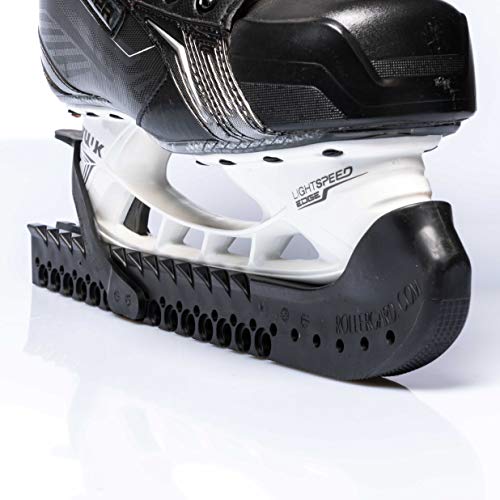
The SuperGard is sold as a hockey skate guard, with a non-slip strap, side drainage holes and a wide serrated bottom for walking. It was the #2 best seller in Amazon's Figure Skates category as of October 2026. Check that it fits your blade length.
What soakers do
Soakers are soft covers, usually terry cloth or similar, that absorb leftover moisture. Riedell says they help draw off remaining moisture and protect blade edges when skates are stored in the bag.
The Coolrunner listing says absorbent terry cloth in sizes M and L, sold as one pair.
Why you should never store blades in hard guards
Hard guards trap moisture against the steel. Riedell says blades should never be stored in hard guards because they hold moisture against the metal and can cause rust. CRS Cross also notes this on its listing.
The simple routine
- Step off the ice and put on hard guards.
- At the bench, take off the skates and remove the guards.
- Wipe the blades and mounting area dry with a towel.
- Put soakers on for the trip home.
- At home, take the skates out, wipe again and let them air dry.
Riedell notes that water droplets can form on blades after a few minutes, so wipe again.
An all-in-one set
The CRS Cross set includes hard guards with a spring assembly, microfiber soakers and a towel, per the listing.
A better towel
A microfiber blade towel that keeps blades dry, per the listing.
Common mistakes
- Leaving guards on in the bag
- Skipping the towel
- Using a wet towel
- Walking on concrete without guards
More on the full routine in How to Care for Figure Skate Blades.
More to know
A quick note on sizes. Guards need to match the blade length, so check the product's adjustable range or size guide. Soakers also come in sizes, such as M and L on the Coolrunner listing, and a soaker that is too short leaves the end of the blade exposed.
Teach young skaters the routine early. A simple rhyme can help: guards for walking, soakers for storing. If a skater forgets and leaves hard guards on in the bag, no panic, just take them off and dry the blades as soon as you notice. The sooner the metal dries, the less chance of rust. Over time the routine becomes automatic.
FAQ
Can I walk on the ice with soakers on?
No. Soakers are for storage. Use hard guards to walk.
Do I need both?
Yes. They do different jobs.
Can I use hockey guards on figure skates?
Some skaters do, since a guard that fits the blade length works. Check the length and fit first.
How often should I replace them?
When they crack, stretch out or stop fitting. Riedell says to replace guards when needed.