
As an Amazon Associate I earn from qualifying purchases. If you buy through a link on this page, it costs you nothing extra. How it works.
Quick answer: dress in thin layers you can peel off, stretchy leggings that fit over the boot, thin skating socks or tights, gloves, and padded protection for falls. Avoid thick socks and baggy clothes.
Rinks are cold, but skaters warm up fast once they start moving. Layers work better than one heavy coat.
 90 Degree by Reflex zip jacketBest for: moving up skaters
4.4
Check price
 Stelle flare leggingsBest for: moving up skaters
4.6
Check price
 CRS Cross skating tights (2 pair)Best for: beginner skaters
4.6
Check price
 SATINIOR skating socks (6 pair)Best for: budget skaters
4.5
Check price
 Stretch knit glovesBest for: beginner skaters
4.4
Check price
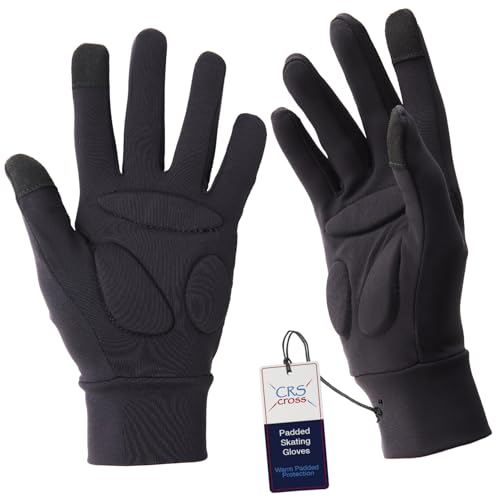 CRS Cross padded skating glovesBest for: moving up skaters
4.5
Check price
The basic outfit
Base layer and top
A long-sleeve fitted top is a good start. Over it, a lightweight zip jacket is easy to take off when a skater warms up.
The 90 Degree by Reflex jacket is listed as a lightweight, slim fit full zip track jacket with thumbholes. It is sold as an athletic jacket, not a skating-specific one. Slim fit means it is less likely to catch on anything during a session.
Bottoms
Stretchy leggings are a common choice. Some skaters prefer a flare leg that fits over the boot.
The Stelle leggings are listed as flare legs that fit over the boot, sold as dance and everyday leggings.
Socks or tights
Thin, knee-high skating socks or tights go inside the boot. Thick socks make the boot fit tighter and can create pressure points. Riedell notes that a boot should fit properly, so use the same thin layer when you try on skates.
Gloves
Gloves keep hands warm and protect the palms from the ice during falls.
The Motique stretch knit gloves are listed as simple and inexpensive. The CRS Cross gloves are listed with three impact pads for falls, a fleece lining and water resistance, in Youth-Small, Youth-Medium/Large and Ladies sizes.
Protection
Padded shorts protect the hips and tailbone and are popular with younger skaters. See Best Padded Shorts for Figure Skating.
A practice dress option
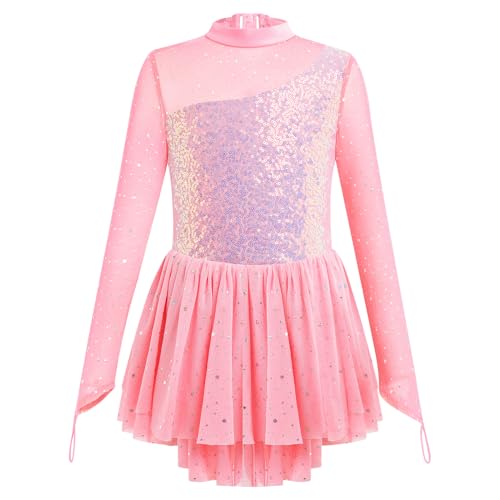
Some skaters like to practice in a dress. A mesh sleeve sequin dress like the ODASDO is listed as a practice dress option.
What to avoid
- Baggy pants that can catch on a blade
- Jeans, which restrict movement and get heavy when wet
- Loose scarves or long strings
- Jewelry that can snag
Hair
Keep hair tied back so it stays out of the face, using no-crease elastics so there is no headache from a tight band.
A simple checklist
- Fitted top and a layer
- Stretchy bottoms
- Thin skating socks or tights
- Gloves
- Padded shorts (optional but common)
- Hair tied back
Also pack guards and soakers, covered in Skate Guards vs Soakers. Boys can see more in the boys figure skates guide, and our rink bag checklist covers the rest of the bag. Going to public skating for the first time? Read what to bring to public skating.
More to know
Think of the outfit as a system. The goal is to stay warm at the start and stay comfortable once the body heats up. A thin base layer plus a zip jacket does that well, because the jacket comes off in seconds. Gloves can stay on for the whole session.
Check for anything that could catch a blade or flap into the skater's face. Cuffs, drawstrings and loose hair are the usual suspects. Before the first session, have your skater move around at home in the outfit: bend, reach, squat and stand. If anything pinches or rides up, change it before you get to the rink. Comfortable skaters focus on learning.
FAQ
Should a beginner wear a dress?
Not needed. Leggings and layers are fine.
Why not thick socks?
Thick socks change the fit and can cause pressure spots. Thin is better.
Are jackets with thumbholes OK?
Many skaters like them. Make sure it does not restrict arm movement.
What if my skater is cold?
Add a thin layer under the top and warm gloves. If the rink is very cold, ask the coach for advice.