As an Amazon Associate I earn from qualifying purchases. If you buy through a link on this page, it costs you nothing extra. How it works.
Quick answer: a turn board and spinner trainer let skaters practice spin positions at home, a stretching strap with a door anchor helps with flexibility, and a Franklin skating trainer helps very young skaters on the ice. Ask your coach how to use them safely.
Ice time is limited and costly. Off-ice tools let skaters practice posture, balance and movements at home. They do not replace lessons.
 Turning boardBest for: moving up skaters
4.5
Check price
 Skating spinner trainerBest for: moving up skaters
4.6
Check price
 CRS Cross figure skating spinnerBest for: competing skaters
4.4
Check price
 Stretching strap with door anchorBest for: moving up skaters
4.6
Check price
 Franklin skating trainerBest for: toddler skaters
4.4
Check price
Turn boards and spinners
Turning board
The listing says it is for spin and turn practice at home. It also says 300+ bought in the past month as of October 2026.
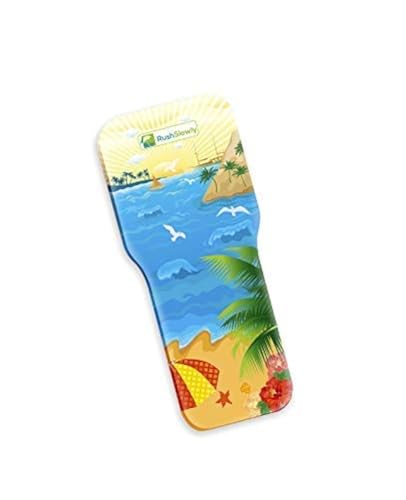
Skating spinner trainer
Listed as light and portable, for posture, balance and control.
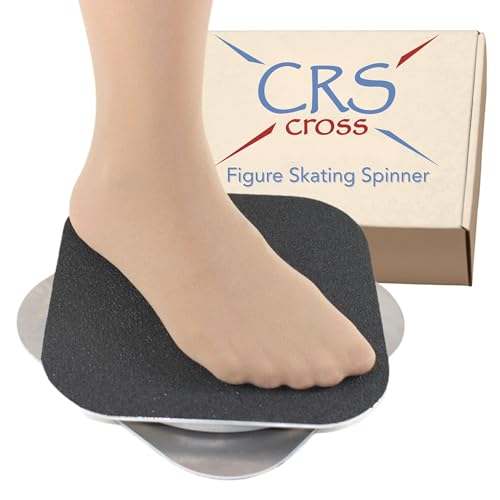
CRS Cross figure skating spinner
Listed with a metal 8 1/4 inch platform, dual non-skid surfaces and portability.
Which to pick? The first two are lighter and lower cost. The CRS Cross is built with a metal platform. Ask your coach what works for the skater's level.
Flexibility
Stretching strap
The listing describes a door anchor, a foam layer that protects the door and an adjustable strap, for splits and flexibility.
Always warm up before stretching, and never force a stretch. Ask a coach or trainer for a safe routine. If a skater feels pain, stop and see a coach or doctor.
For little ones on the ice
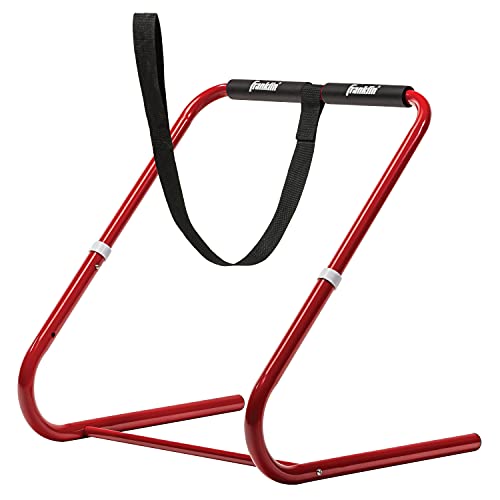
Franklin skating trainer
The listing says it has a walker-style frame for the ice, a leash that lets a parent pull at first, and two heights: 18.5 or 22.5 inches. Good for very young beginners who need help balancing.
How to use off-ice tools safely
- Use them on a clear, flat floor.
- Keep space around you.
- Wear socks or shoes as the instructions say.
- Start slowly. Short sessions are better.
- Have a parent nearby for young skaters.
What off-ice work can help with
- Balance
- Posture
- Spin position
- Flexibility
Ask your coach about drills specific to the skater's level.
Do you need these?
No. Beginners do well with ice time and lessons. Off-ice tools are a nice extra for skaters who want to practice more. See The Complete Beginner Figure Skating Shopping List for the essentials first.
What to skip
Avoid tools that promise instant results. Progress takes practice with a coach.
Gift idea
Off-ice tools make good gifts. See Figure Skating Gift Guide.
More to know
When you start, keep sessions short and relaxed, and let the skater lead. Five to ten minutes a few times a week is a good habit for many young skaters, but your coach may suggest something different. The aim is to build body awareness: posture, balance, and a feel for spinning, not to push to exhaustion.
Parents can help by finding a clear space with a smooth floor and keeping pets and furniture out of the way. For stretching, warm the muscles first with light movement. And if a skater says something hurts, stop. Tools are meant to support lessons and ice time, not replace the advice of a coach.
FAQ
Can a turn board hurt a skater?
Any spinning surface can cause a slip or dizziness if used carelessly. Use it on a clear floor and start slowly. Ask a coach.
Can beginners use off-ice tools?
Yes, with supervision, but they are not needed at first.
How long should sessions be?
Short sessions, a few minutes at a time, are a good start. Your coach can advise.
What if stretching hurts?
Stop. If pain continues, see a coach or doctor.